
At some point in your screenwriting journey and career, you’re going to need to write a “Risk It” Script. The original term begins with another four-letter word beginning with F, but we’re taking the family approach for this discussion.
Screenwriters are bombarded with musts. You read the screenwriting books, you listen to the screenwriting podcasts, you watch interviews with successful name screenwriters, you attend screenwriting Q/A panels and listen to industry pros tell you what you must do to become a professional screenwriter. All of those musts can create extreme anxiety and overwhelmingness — all of which can crush your dreams and subdue your passion and drive. And, oddly enough, many of those musts, rules, and guidelines can contradict one another.
If you’re tired of all of that, it’s time to write your “Risk It” Script.
What Is a Risk It Script?
A “Risk It” Script is where you stop worrying about whatever anyone else wants — or expects — and just go all-in on the story you want to tell and how you want to tell it.
- It’s the one you’re willing to risk everything for.
- It’s the seemingly off-kilter one that you need to get out of your system and onto the page in cinematic fashion.
- It’s the story that’s been clawing its way out of you.
- It’s the story that’s been nagging you.
- It’s the one that won’t shut up.
- It’s the script that perhaps doesn’t fit the commercial mold.
- It’s the one that’s weird, or experimental, or personal, or epic, or niche, but it needs to be written.
- It’s the screenplay that every fiber in your being has been trained and told not to write.
This is the script where you don’t let the development executive, agent, or manager talk you into changing a word. At least not until it’s sold — but even then, maybe you stand your ground and say that it’s your way or the highway for this one.
If your people — or those you network it to — don’t get it or dismiss it, then you go find somebody who sees it like you do. Someone who gets it. Someone who reads your vision and says, “I’ve never read anything like this before. I need to be a part of it.”
And even if no one gets it? That’s okay.
Because, if anything else, writing a “Risk It” Script is going to do something you may need in the moment, or many have needed for a long time — it’s going to reignite your passion for screenwriting.
You may not sell it. But the act of writing it — the freedom of writing it — is one of the best feelings you’ll ever have as a screenwriter.
And keep in mind that many of the greatest screenplays and movies were those that risked it all, with multiple agents, managers, producers, studios, networks, and streamers having passed on them until someone read them and, again, said, “I’ve never read anything like this before. I need to be a part of it.”

Don’t Confuse “Risk It” with “Reckless”
Make no mistake, a “Risk It” Script doesn’t mean you’re getting a free pass to write something sloppy. Risking it doesn’t mean you toss out everything you’ve learned (or are learning) about cinematic storytelling, structure, format, character, story, and overall craft. It’s not an excuse to ignore the fundamentals.
- You still have to do the front-end work.
- You still have to let the seed (concept) grow and develop it.
- You still have to visualize a majority of the script before you type a single word.
- You still have to create a great opening, sustain the story/plot/character through the middle, and build to
- an exciting and cathartic conclusion/climax, no matter what the genre.
Don’t misinterpret this type of script as one where you can just vomit draft your way to 90-to-115 pages. With this type of script, you owe it to yourself to make it great because you are writing for you. Let your “Risk It” Script be the purest reflection of your voice — but also the most refined version of your skill.
Play with Structure, Character, and Format
Here’s the other magic and excitement of writing a script like this — you get to bend the rules as far as you can and should.
- Try non-linear structure
- Tell the story backwards or inside out
- Kill your protagonist halfway through
- Shift genres mid-story
- Let scenes and timelines bleed into each other
- Break your own habits
- Do something you’ve never done before
- Try what scares you the most
Just make sure that while you’re doing some or all of that, you’re still communicating clearly with the reader. Be cinematic. Be intentional. But don’t alienate the reader. Keep it readable, and invite them in.
Even if your script is unconventional — even if it’s strange — the clarity of your voice and your control of the page needs to shine through. That is what will get you noticed.

Trojan Horse Your Unique Story By Wrapping It in Desirable Genres
Here’s a pro tip. You can trick Hollywood into reading your “Risk It” Script. How? By creating a hybrid.
Wrap that bold idea and leap of faith into a familiar genre shell. Make it look like something they want on the surface — an action thriller, a horror flick, a fish-out-of-water comedy — but once they are in, take them somewhere unexpected.
Look no further than the Oscar-winning Everything, Everywhere, All at Once. The story was a unique spin on both a multiverse concept, as well as a personal and quirky drama about anxiety and relationships — but wrapped in the desirable genres of science fiction, action, and martial arts.
Start that action thriller in a conventional way. Follow the genre rules just long enough to set up the initial hook, and then take it off the rails. Script readers, development executives, producers, managers, agents, directors, and talent read hundreds of scripts per year.
- They want to be surprised.
- They need to be shaken out of their stupor.
If you can offer something new but wrapped in an otherwise familiar and safe blanket, your risky story or concept will leap off of the page.
Make them think they know what they are reading — play on their expectations — and then subvert those expectations. Risk it.
Why Risking It Matters in Screenwriting
The truth is that all screenwriters need to write spec scripts that check those industry boxes.
- The tight, 100-page three-act genre pieces
- The somewhat formulaic (albeit accentuated with an exciting concept) thriller
- The contained horror or action story
- The budget friendly buddy flick
Those are the types of scripts that get you in the door, get you reps, get you meetings, and get you writing assignments (the bread and butter of pro screenwriters). But oftentimes, those risky scripts that appear in the inboxes of industry insiders and power players are the ones that people truly remember.
Risking it with a screenplay can help you stand out amongst the thousands of other screenwriters trying to break through the very same Hollywood doors and walls you’re trying to tear down.
Stacking Your Deck
It’s all about stacking your deck. You need to hone your craft and start writing scripts that are polished — ones that showcase your talent but also affirm that you can play in most Hollywood sandboxes with ease. But the strongest decks always have those standout “Risk It” Scripts that make industry insiders stop and truly take notice.
If you have three or four of those great writing samples that prove you have what it takes to take on any writing assignments, work to accompany that deck with a risky but refreshing screenplay that also showcases your individuality, personal style, and unique voice.
Successful “Risk It” Scripts
Let’s talk about the king of “Risk It” Scripts: Charlie Kaufman.
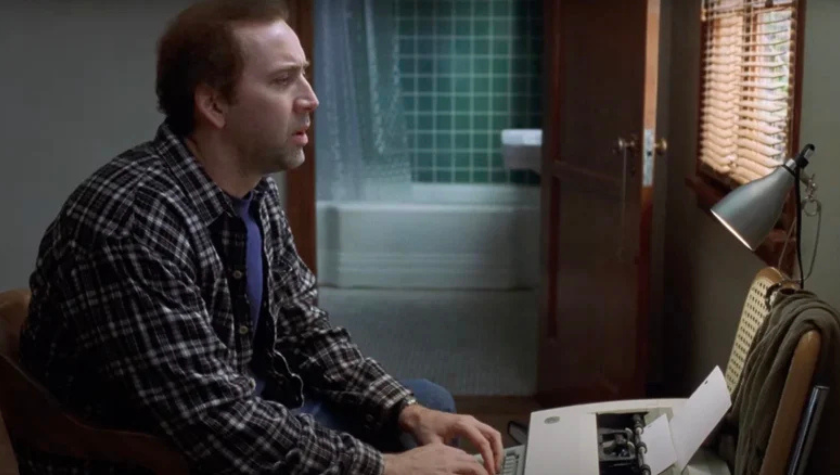
Kaufman has made a career of telling unique, quirky, and outright risky cinematic stories. Being John Malkovich is a portal-fantasy existential comedy where people crawl into a tunnel behind a filing cabinet and inhabit iconic actor John Malkovich’s body for 15 minutes. The script was a spec script written by Kaufman in 1994. Kaufman’s original concept was nothing too exciting — it was to be about a man who fell in love with a woman that wasn’t his wife. He would then make the most risky choice of all by choosing to add the element of characters being able to climb into the mind of John Malkovich. It was an outrageous concept that eventually was passed around in Hollywood with an amazing amount of buzz — but, at least at first, nobody was buying it until Francis Ford Coppola got his hands on the script, later handing it over to his daughter’s boyfriend, budding filmmaker Spike Jonze.
Kaufman’s Adaptation was supposed to be an adaptation of Susan Orlean’s The Orchid Thief. He was hired on assignment. However, after struggling to handle writing a direct adaptation, Kaufman decided to risk it all by inserting himself into the story as a character. He then created a fictional twin brother. The third act eventually turns into a satire of Hollywood screenwriting.
- Both scripts are brilliant.
- Both were widely considered unfilmable.
- Both were filmed and received Oscar nominations.
They were “Risk It” Scripts. And they changed what people thought was possible in a screenplay.
Go Write Your “Risk It” Screenplay!
Don’t wait for permission. Don’t run the concept by a committee of industry insiders to see if it’s worthy. Write your “Risk It” Script now.
If you don’t have a risky concept yet, be patient and try to find one that compels you. When you accomplish that, let the seed grow. Build on it. Make it cinematic. Find the narrative that fits best for it. Play with structure, story, and character to make it more and more unique and fresh.
But most of all, make it yours.
Even if you’re not trying to reinvent the wheel, the act of writing something that is truly you without the many proven and perceived constraints of Hollywood can become the most liberating experiences you have on your screenwriting journey, no matter what success or lack of success that follows.
The energy you get from writing a script like this will change you. It can end up fueling all of your writing. You’ll come back to your more commercial specs sharper, more energized, and more confident. Even more important, you’ll have a better sense of voice. Voice is everything in a screenwriter’s career. It’s what makes you stand out from the rest.
If you never take creative risks, you’ll never know what you’re capable of. With “Risk It” Scripts, you won’t have to worry about the industry response. They may discover something they didn’t know they wanted. And when the right person gets their hands on it, reads it, and gets it? That’s where the magic can truly happen.