


Selling your first screenplay isn’t about secret formulas to success, lucky breaks, or knowing the right people.
Sure, there are formulas that can help. Yes, luck does come into play as far as being at the right place, at the right time, with the right people. And, of course, knowing the right people can give you an edge. However, the screenplay itself is going to be the deciding factor.
For a producer, production company, studio, network, or streamer to invest time and money - not to mention millions of dollars if the script is greenlit for production - into buying and developing your script, they are going to need to love it. They are going to need to see instant and undeniable potential for your script, and the eventual produced product that follows.
Hollywood doesn’t like to gamble. They are risk-averse. Yes, there are times when they do roll the dice. But more often than not, taking major chances doesn’t pay off. They can’t count on lottery tickets or big swings with each script they buy. They need to play the odds as much in their favor as they can.
- Sometimes they play it too safe and the audience doesn’t show up.
- Other times they take too much of a swing and the audience doesn’t show up.
So screenwriters need to get in their mindset. And that mindset is finding ways to offer new, original, and unique elements wrapped in a package that seems safe and comfortable for them, and for the audience.
After two decades in the Hollywood trenches on both sides of the table as a script reader and story analyst for a major studio, and as a produced screenwriter with multiple studio meetings under my belt, a development deal with a major studio, and multiple produced and distributed features, here I present five elements that can help you sell your script.
There are no guarantees. You can follow any and all of these guidelines and still not sell a thing. But having a script in your deck of samples that checks these boxes can drastically increase your odds of finding success.
1. A High Concept Premise with an Intriguing Hook
What does “high concept” mean? It’s a question that even established Hollywood insiders can’t always answer. You just know a “high concept” when you see it. Many novice screenwriters assume that “high concept” entails big budgets, action, special effects, and spectacle. Nothing could be further from the truth. In fact, Hollywood is often scared off by spec scripts (scripts written under speculation that they’ll be sold and produced) with those elements attached. Why? Because they don’t want to spend $200 million plus on an original screenplay with no already-established audience like you would see with adaptations to best-selling books or sequels/prequels/remakes/reboots.
When we’re talking about “high concept” we can define it fairly easily. High concept scripts can be pitched in a single sentence that immediately makes someone think, “I have to see that movie.” Why?
- Because the core concept is simple and easy to sell.
- Because the premise is instantly intriguing, offering immediate investment in the characters and wondering how the premise is going to play out.
- Because there’s hopefully a unique and original hook that makes an otherwise familiar and safe premise feel new and original.
Perhaps it’s less about them thinking, “I have to see that movie,” and more about them thinking, “I see that movie after reading the logline. I see the poster. I know the audience. I see the trailer. I see the potential.”
And let’s talk about the hook.
The hook is where you flip an otherwise familiar concept (again, familiar is good to start) by adding an extra element that shakes things up.
Jurassic Park could have been another sci-fi flick about characters that go back in time to exist amongst the dinosaurs. It had been done before in movies, television, and literature. However, the book and eventual movie adaptation gave us the clever and intriguing hook of setting the story in present times, and having the dinosaurs cloned for the purpose of an amusement park like no other. Dinosaurs unleashed in an amusement park? High concept.
Barbie could have been a simple intellectual property (IP) gimmick showing Barbie and her friends in Barbieland. But the pitch was that Barbie and Ken would go on a journey of self-discovery beyond Barbieland and into the real world. It pushed an otherwise cash-grabbing IP tentpole (a movie that a studio would depend on to support profit margins for the fiscal year) into high concept territory by adding an intriguing twist.
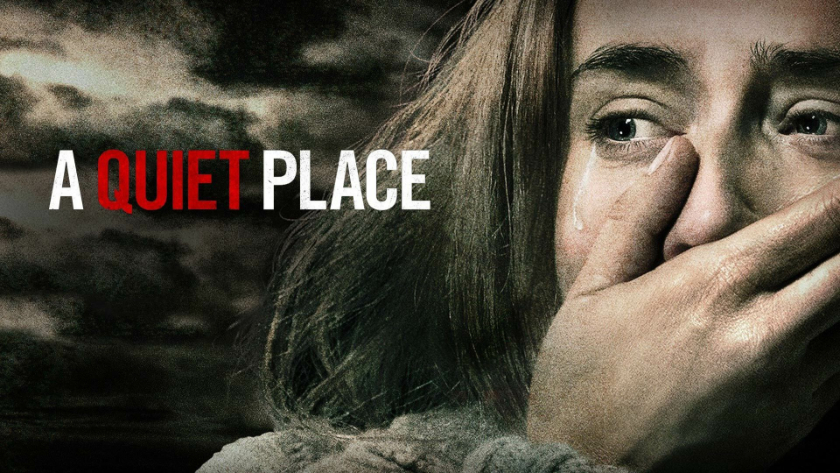
We’ve seen plenty of alien invasion movies. But A Quiet Place offered the unique hook of a family living in complete silence to avoid alien creatures that hunt by sound.
Find a high concept premise with an intriguing hook, and understand that the hook is your first - and sometimes only - chance to get noticed. Without it, the below four elements won’t matter.
2. A Story with Emotional and High Stakes
High concept with an intriguing hook gets you in the door - but emotional high stakes keeps readers turning pages. Agents, managers, producers, and development executives are trained to think:
- Why should anyone care?
- What’s at risk?
It’s all about the stakes. Stakes can be defined as the potential losses and gains for characters that give the narrative meaning and compel the audience to care about their actions and goals.
Stakes operate on two levels:
- External Stakes - What happens if the protagonist fails? Will the world explode (Armageddon)? Will the washed up boxer defy the odds and beat the champ (Rocky)? Will Maverick and his pilots achieve the objective (Top Gun: Maverick)? Will Indy stop the Nazis from unlocking the power of the ark (Raiders of the Lost Ark)?
- Internal Stakes - What does the protagonist stand to lose or gain emotionally? Will the daughter lose both her father and fiance (Armageddon)? Will Rocky find inner peace by proving that he can go the distance with the champ and prove to Adrian, and himself, that he’s not just some bum on the streets (Rocky)? Can Maverick make amends with Rooster who blames him for his father’s death, and for stalling his career (Top Gun: Maverick)? Can Indy make up for his past mistakes with Marion and save her from harm (Raiders of the Lost Ark).
If your script has spectacle but is void of emotion, it’ll feel hollow. If it has emotion but lacks conflict and stakes, it will feel small and forgetful. You need high stakes packed with emotion to move an audience. But before that, you need to move the script reader.
3. A Protagonist the Audience Wants to Root For
Hollywood doesn’t buy plots. They buy characters that can carry a movie or series. Why? Because audiences want someone to root for. Cinema is all about audiences living vicariously through the protagonist. They want to go on adventures, overcome struggles, fall in love, solve the mystery, be clever, be funny, and win.
This doesn’t mean protagonists can’t be flawed. In fact, the best protagonists are those with flaws. Why? Because that makes them more human and relatable. The reason 2025’s Superman works on a higher level than previous incarnations is because they made him flawed and vulnerable.
John McClane in Die Hard wasn’t an unstoppable action hero. He was vulnerable, small, barefoot, and desperate to save his wife.
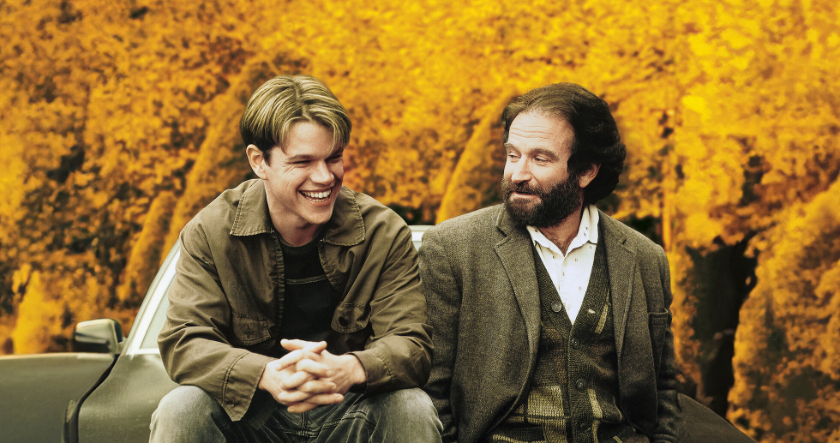
In Good Will Hunting, Will was extremely flawed. He was brilliant, but broken. He was sweet, but violent. His story was more about healing than his genius.
In The Sopranos, Tony is a violent and vengeful gangster. But we see the humanity in him through his interactions with his wife, children, and mother.
You need characters that the audience wants to root for despite their flaws. It may be funny and intriguing to showcase a protagonist that is ultimately unlikable. However, the best written ones are those that showcase humanity and relatability in the end.
It goes beyond what the audience wants as well. Agents, managers, producers, development executives, and directors want to see scripts with protagonists that major actors will want to portray. And most actors will want those great roles that will have audiences rooting for them in the end. That’s how movies and shows are packaged and greenlit.
- Will great actors want to play this role?
- Will audiences see themselves in the character, or want to root for them for two hours or through a whole season?
If the answer is no, it’ll be hard to get the script sold.
4. A Cinematic Story That Is Easy to Visualize
Remember, you’re not writing literature. You’re writing blueprints for cinematic tales that people can see unfold visually on the big or small screen. Your script has to instantaneously play in a reader’s mind like a film unspooling on the screen.
To accomplish this, you need to showcase:
- Visual Storytelling - Less dialogue-driven exposition with more action and imagery.
- Clear Set Pieces - Memorable and cinematic scenes and sequences that would look good in trailers.
- Short, Sweet, To the Point Description and Dialogue - Every line of description should be quick, readable, and visual. Every line of dialogue should be there for a reason. Less is more.
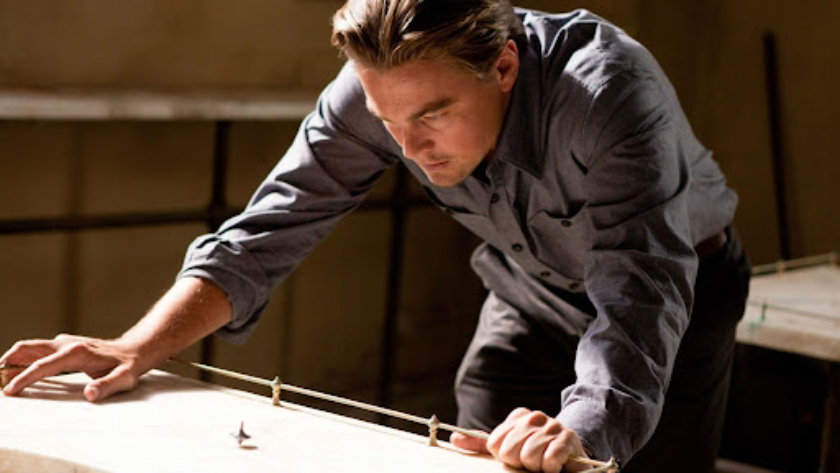
If you watch Inception, you’ll see that Christopher Nolan sold the studio on a film about “dream heists” because the script was bursting with cinematic imagery and set pieces.
“But wait, you said big action, big budgets, and spectacle can scare Hollywood away.”
That’s the genius of Inception as a screenplay. It offered enough emotional stakes (see above) to sell the studio on the spectacle. He did the same thing with Interstellar, selling the studio on the visually-stunning space spectacle, but offering the added emotional stakes of a story that is essentially about a father trying to get back to his kids.
Dramas are very difficult to sell on spec. But you can accomplish cinematic feats in dramas by placing the characters and their dialogue-driven moments in visual set pieces. Good Will Hunting placed the character:
- In a bar versus an intellectual rival
- On a date with a girl who challenges him
- On a bench with a mentor who makes a connection with him
- In a classroom with a mentor who he challenges
- In situations with his common friends that revert him back to his common roots
These are cinematic set pieces without the dynamics of special effects and spectacle.
5. Tight Scripts That Scream “Professional”
Here’s a hard truth - formatting, structure, and polish matter. The presence of sloppy format, bad grammar and spelling, overwritten description, and meandering scenes will instantly mark you as an amateur. Industry pros can tell by page five whether or not they’re in good hands.
Good script reads entail:
- Industry-standard formatting (Final Draft software is the industry standard for a reason)
- Good pacing with the sweet spot of 90-115 pages for unestablished writers
- Evident voice with a confident and readable style that feels effortless
Why is this essential for selling a script? Because no one in Hollywood has the time for anything less. A screenplay that reads smoothly is a script that gets passed up the Hollywood ladder. Whereas a script that feels like homework gets dismissed as readers move onto the next, even if the concept is good.
Putting All Five Elements Together
Selling a screenplay requires more than just writing a good story. Even some of the best concepts and stories are forgotten and dismissed. You need:
- A high concept premise with a hook
- Stakes that matter
- A protagonist to root for, even despite their flaws
- Cinematic storytelling
- Professional presentation
When those five elements are present and aligned, you don’t just have a good script - you have a marketable product for agents, managers, producers, studios, networks, streamers, distributors, and financiers to sell. That is what Hollywood buys.
Remember, the odds are never easy. You can do all of the above and still struggle to get the script read or purchased. That’s the grind. But when your script has these five elements in play, you’re not just writing to write. You’re writing to sell.